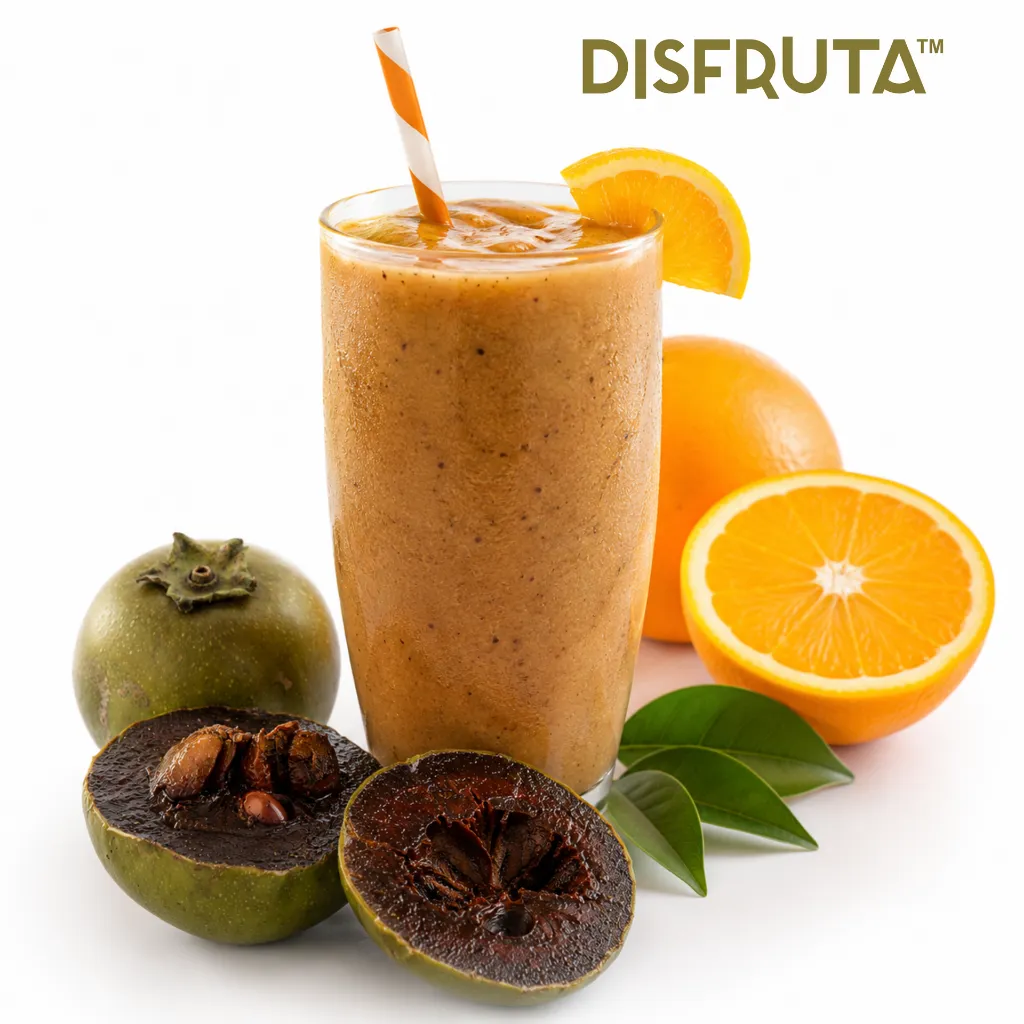
Zapote Negro (Diospyros nigra) |
Black zapote, also known as black persimmon, chocolate pudding fruit or zapote negro, is a tropical fruit native to Mexico and Central America. It belongs to the Ebenaceae family, the same botanical family as persimmons. Identified as Diospyros nigra, also documented under the synonym Diospyros digyna, this distinctive fruit is recognized for its olive-green skin and remarkable dark-brown to nearly black flesh, featuring a naturally sweet flavor and exceptionally creamy texture. Grown in Veracruz, Mexico, black sapote is a traditional fruit with considerable culinary value, particularly for desserts, beverages and contemporary Mexican cuisine.
Organoleptic Properties
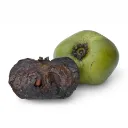
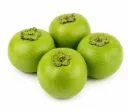
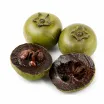
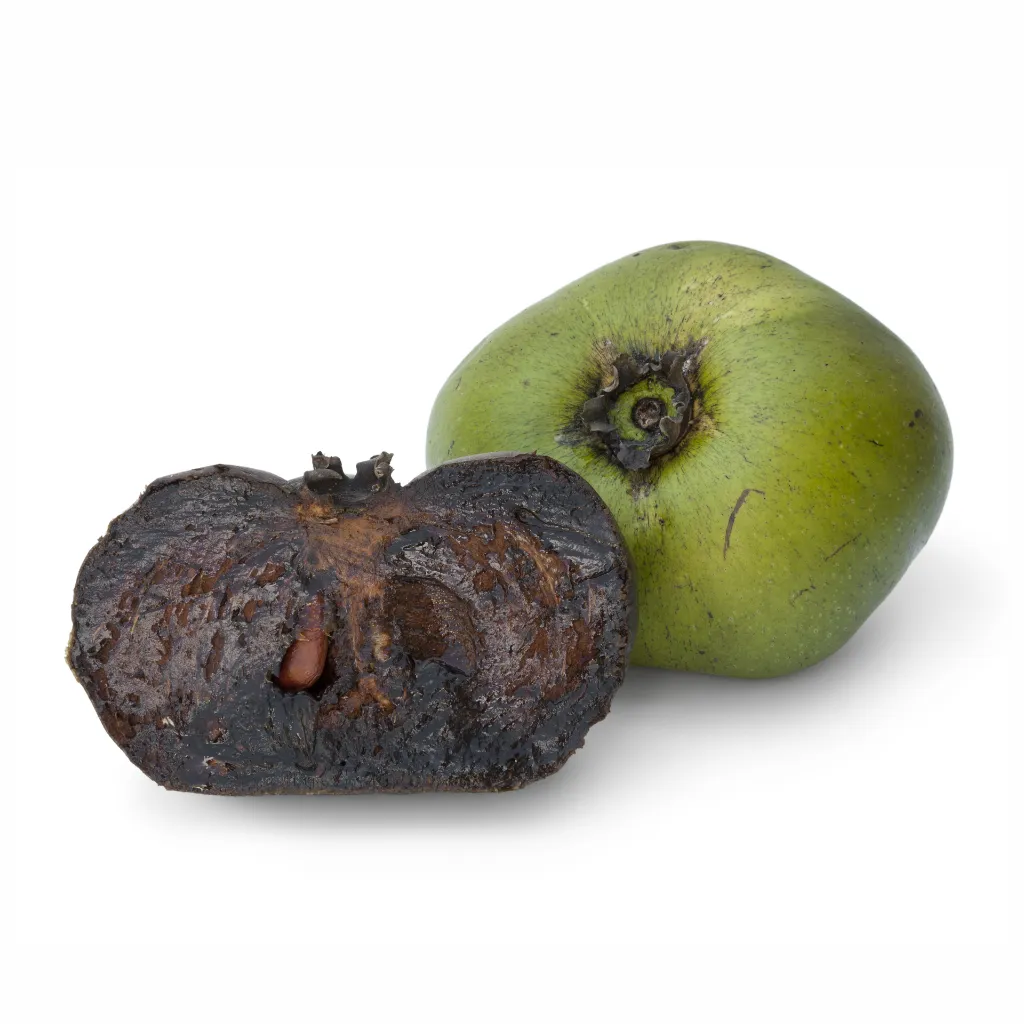
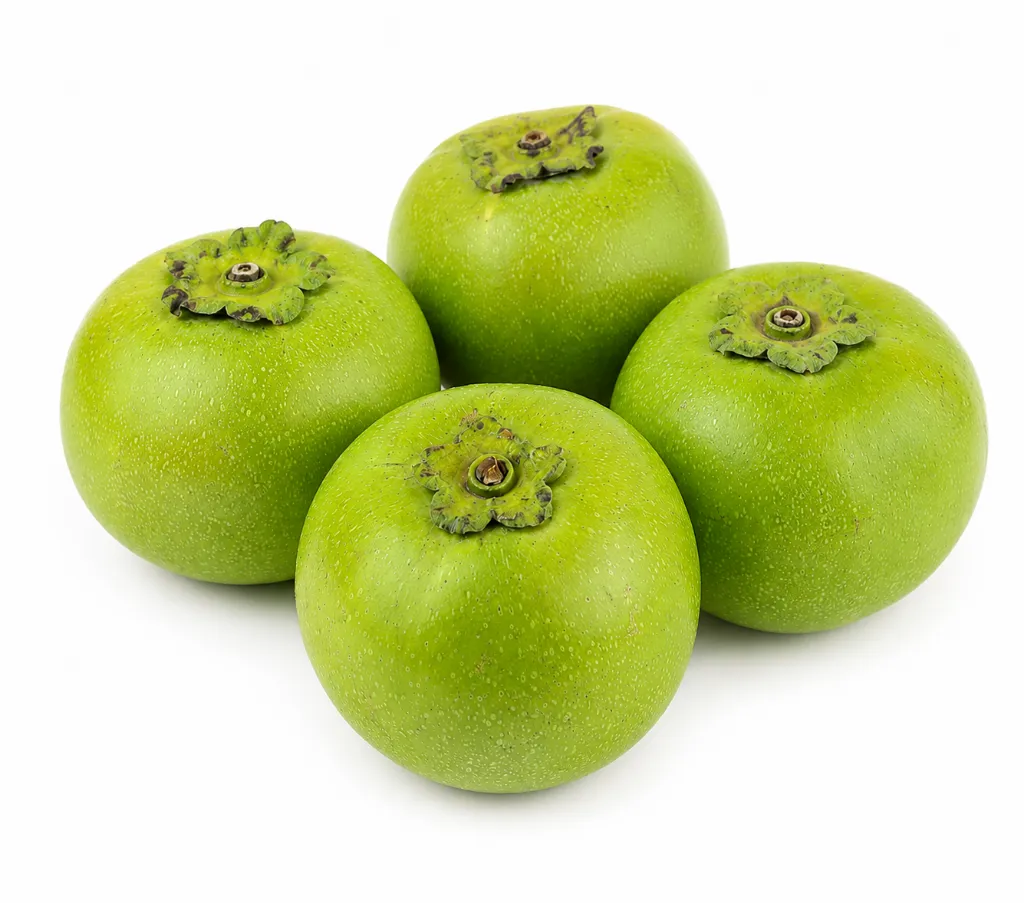
Round to slightly flattened fruit resembling a large tomato, with thin skin ranging from bright green to dull olive green as maturity develops. A prominent green calyx remains attached near the stem. During ripening, the flesh undergoes a remarkable transformation, changing from pale and firm to extremely soft, creamy and dark brown to almost black.
Its flavor is naturally sweet, mild and delicate, with subtle notes reminiscent of caramel, ripe fruit and light molasses. The pulp has a texture comparable to chocolate pudding or mousse, although it contains no cocoa and does not taste exactly like chocolate. Fruit may contain several large, smooth, dark seeds that should be removed before using the pulp.
Suggested Uses
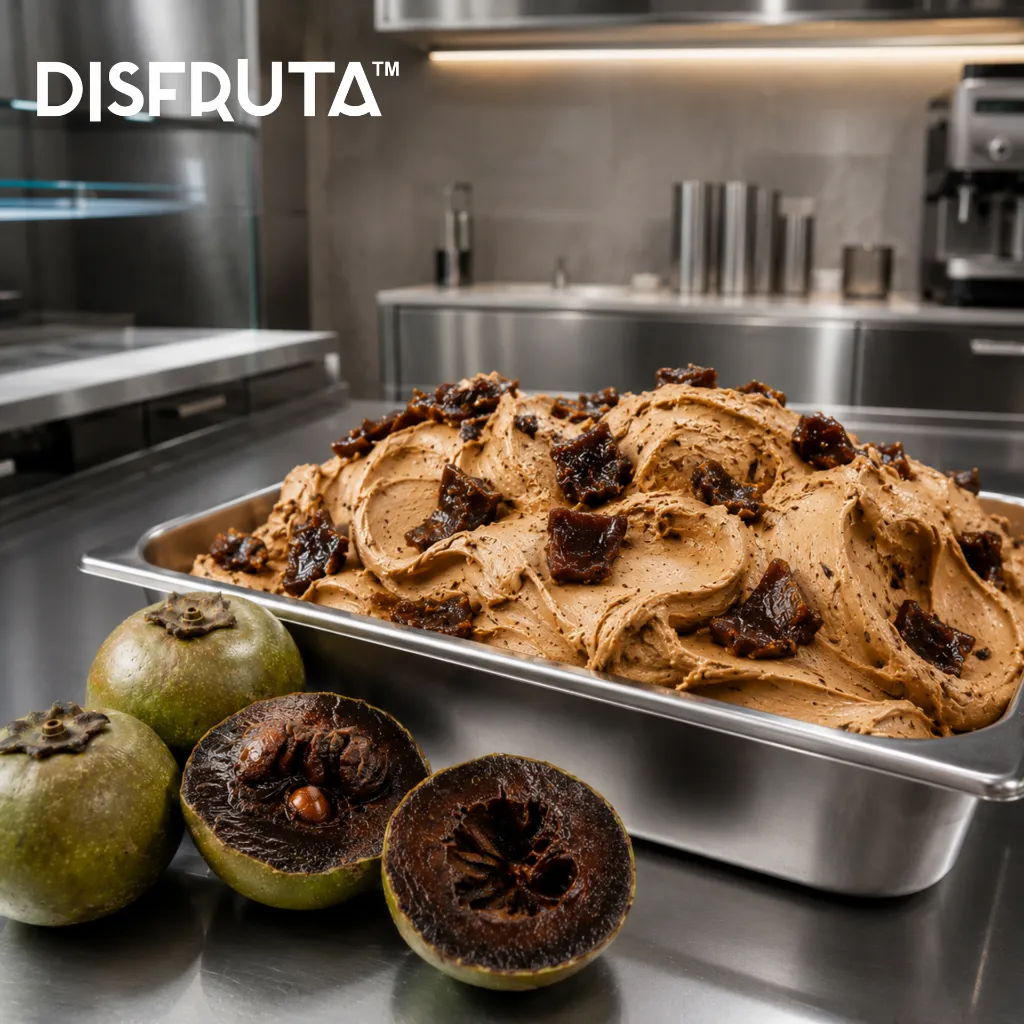
Ideal for fresh consumption when fully ripe, as well as milkshakes, smoothies, mousses, ice cream, frozen pops, creams, tarts, cakes, sweet breads and chilled desserts. Its pulp provides a naturally creamy base that pairs well with vanilla, cinnamon, honey, coffee, coconut, chocolate, citrus and nuts.
A traditional and particularly appealing preparation involves blending the ripe pulp with natural orange juice, whose acidity balances the sapote's sweetness and adds a fresh, aromatic profile. In contemporary pastry making, it can be incorporated into dessert cups, parfaits, fillings, sweet sauces, and pastry creams.To enjoy its characteristic texture, it is essential to use fully ripe and very soft fruits; unripe pulp is astringent and not suitable for these preparations.
Format
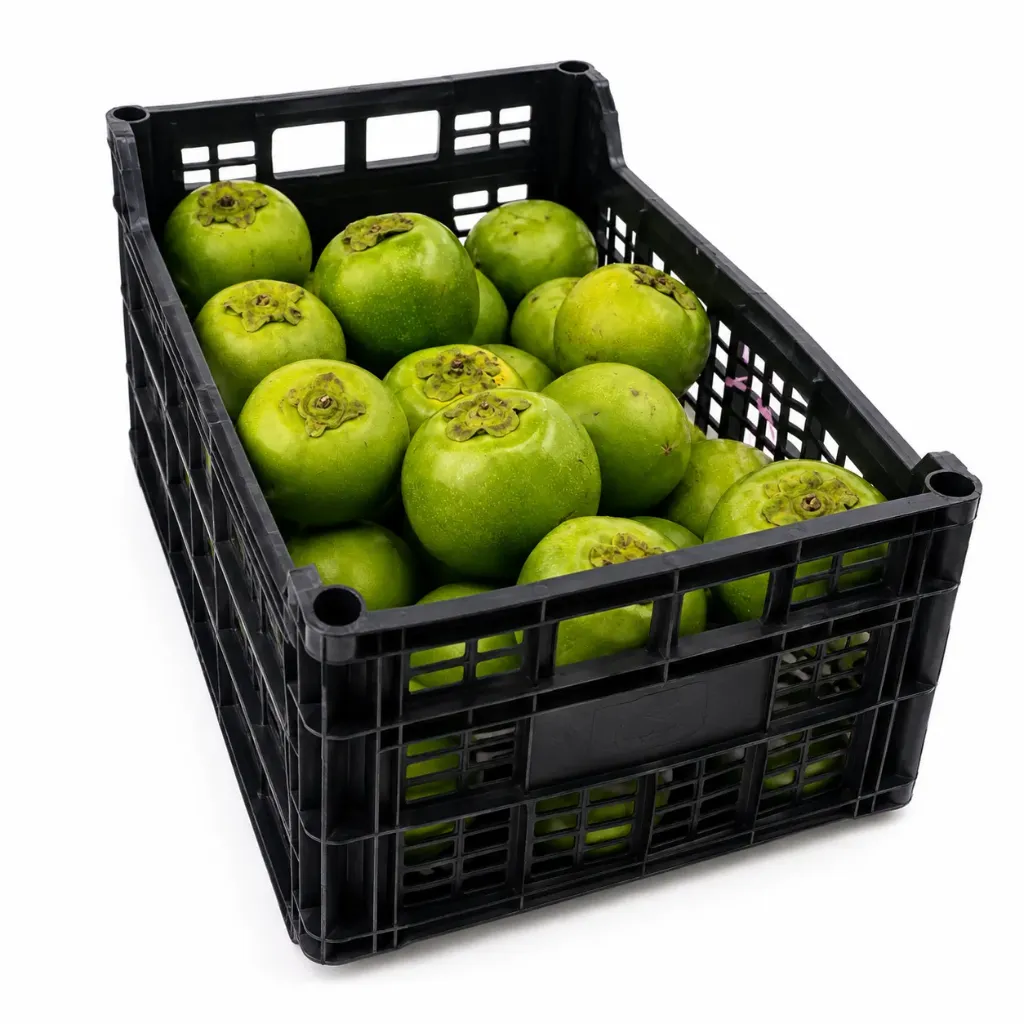
Plastic crate (C-PLS) containing approximately 13 Kg of fresh black sapote grown in Veracruz, Mexico. Whole tropical fruit with natural variations in size, weight, shape and commercial ripeness.
Fruit count and internal arrangement depend on harvest conditions and supplier selection. Plastic-crate packaging supports handling and ventilation, although careful transportation is essential to prevent impacts and excessive pressure on fruit approaching eating maturity.
Storage and Handling
Black zapote is sensitive to chilling injury and should not be handled like temperate-climate fruit requiring storage near 0 °C. Physiologically mature but still firm fruit may be handled at approximately 15–20 °C (59–68 °F) during ripening and short-term holding, adjusting conditions according to actual fruit development. USDA postharvest references indicate that prolonged exposure to approximately 1–5 °C (34–41 °F) may prevent normal ripening.
Allow fruit to ripen at room temperature until it becomes very soft to the touch. Depending on harvest maturity, this may take several days. Once fully ripe, refrigerate briefly and consume promptly. Avoid impacts, excessive stacking, accumulated moisture and direct sunlight. Extracted pulp may be frozen in food-safe containers for later use in desserts and beverages.
Quality and Selection Criteria
Select fruit that is well developed, intact and free from deep injuries, mold and decay. At physiological harvest maturity, the skin typically changes from shiny green to duller green, while the calyx lobes may begin to turn upward, both recognized maturity indicators for this species.
For immediate consumption, black sapote should be very soft, with dark, creamy flesh and a pleasant aroma. Advanced softness is a normal sign of ripeness and does not necessarily indicate spoilage. Avoid fermented fruit, abnormal leakage, unpleasant odors or mold. Green skin and firm flesh should not be mistaken for ready-to-eat maturity.
Season
Black zapote thrives in warm, humid tropical regions, where flowering and fruiting are influenced by rainfall, temperature and orchard conditions. In Mexico's tropical lowlands, fruiting periods have been documented during summer and early fall, although availability in Veracruz may vary according to production region, altitude and agricultural practices. Commercial supply therefore depends on local harvest schedules rather than a uniform year-round season.
Origin
Mexico.
Black sapote is part of the rich fruit heritage of Mesoamerica, where it was consumed long before the arrival of Europeans. Its traditional names preserve Indigenous linguistic roots, including the Nahuatl term tlilzápotl, associated with its characteristic dark flesh. The fruit later spread to other tropical regions of the Caribbean and Asia.
One of its most fascinating botanical characteristics is that despite its common name, black sapote does not belong to the same botanical family as sapodilla or mamey; instead, it is closely related to the persimmon. Its transformation during ripening is equally remarkable: the flesh changes from firm and pale to dark, soft and naturally creamy, acquiring an appearance similar to chocolate pudding without containing cocoa. This unique characteristic inspired its international nickname, “Chocolate Pudding Fruit,” and makes it an especially promising ingredient for highlighting Mexican biodiversity through innovative contemporary cuisine.