Figleaf Gourd (mex:Chilacayote) Cucurbita ficifolia
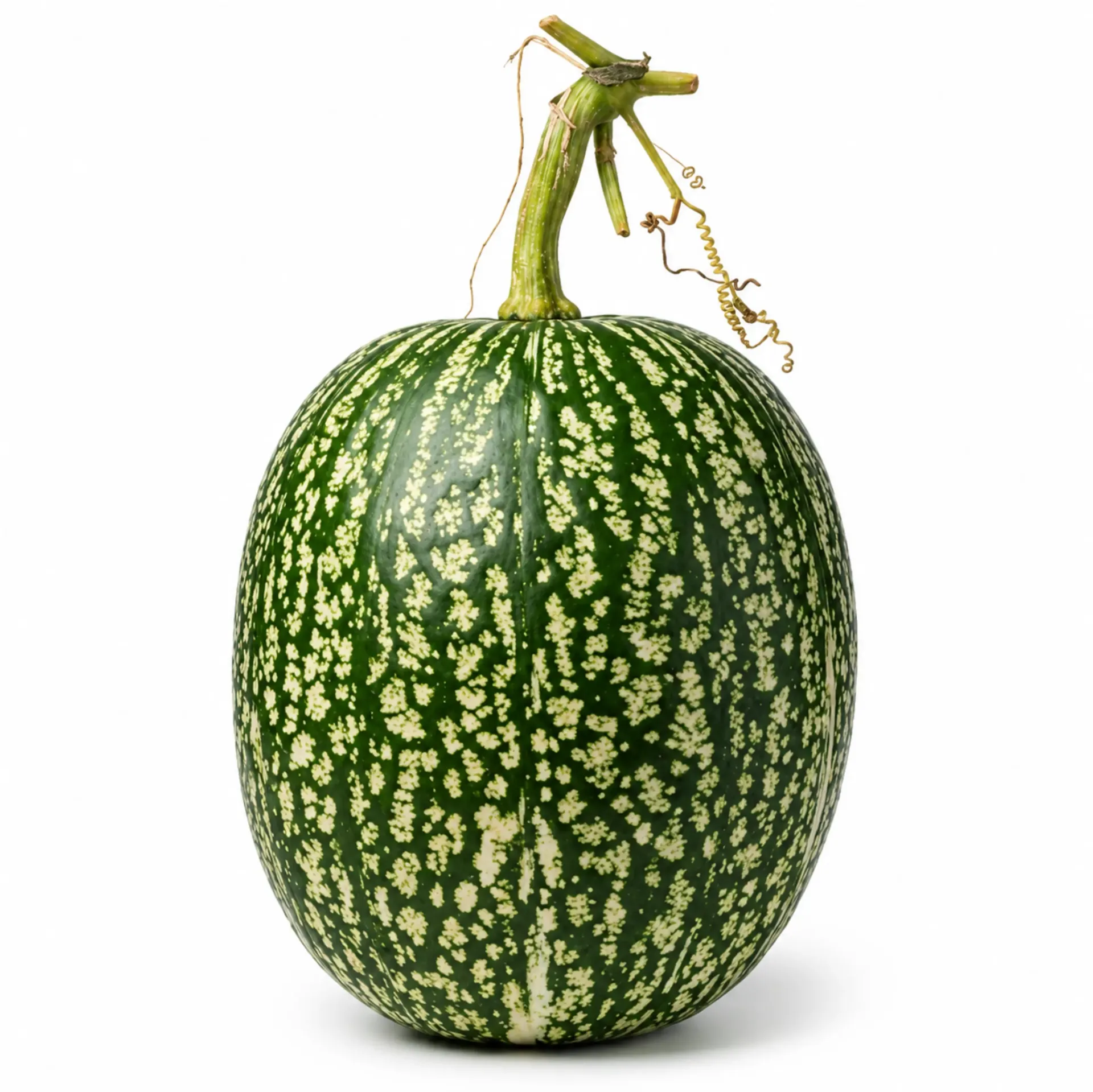
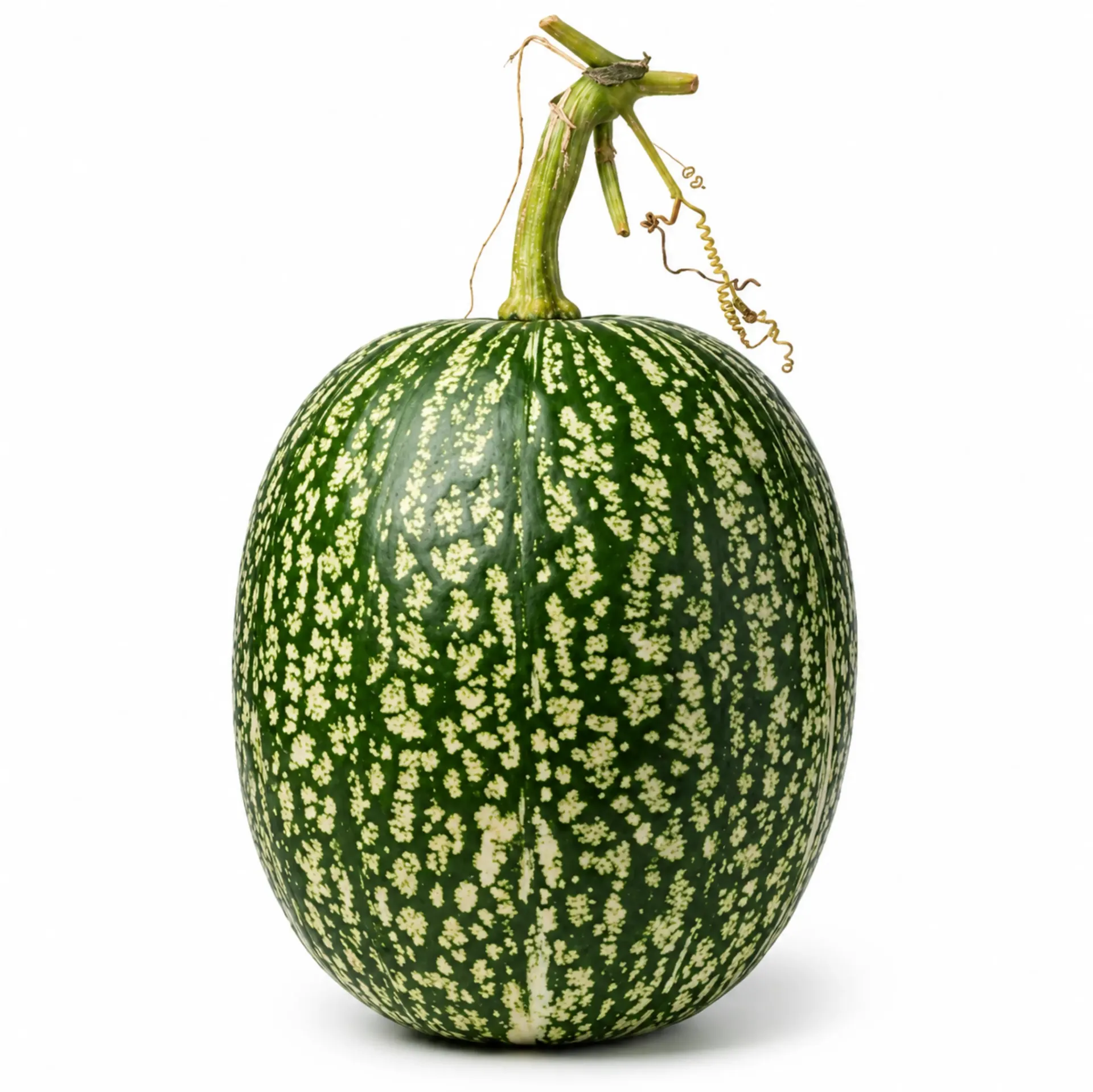
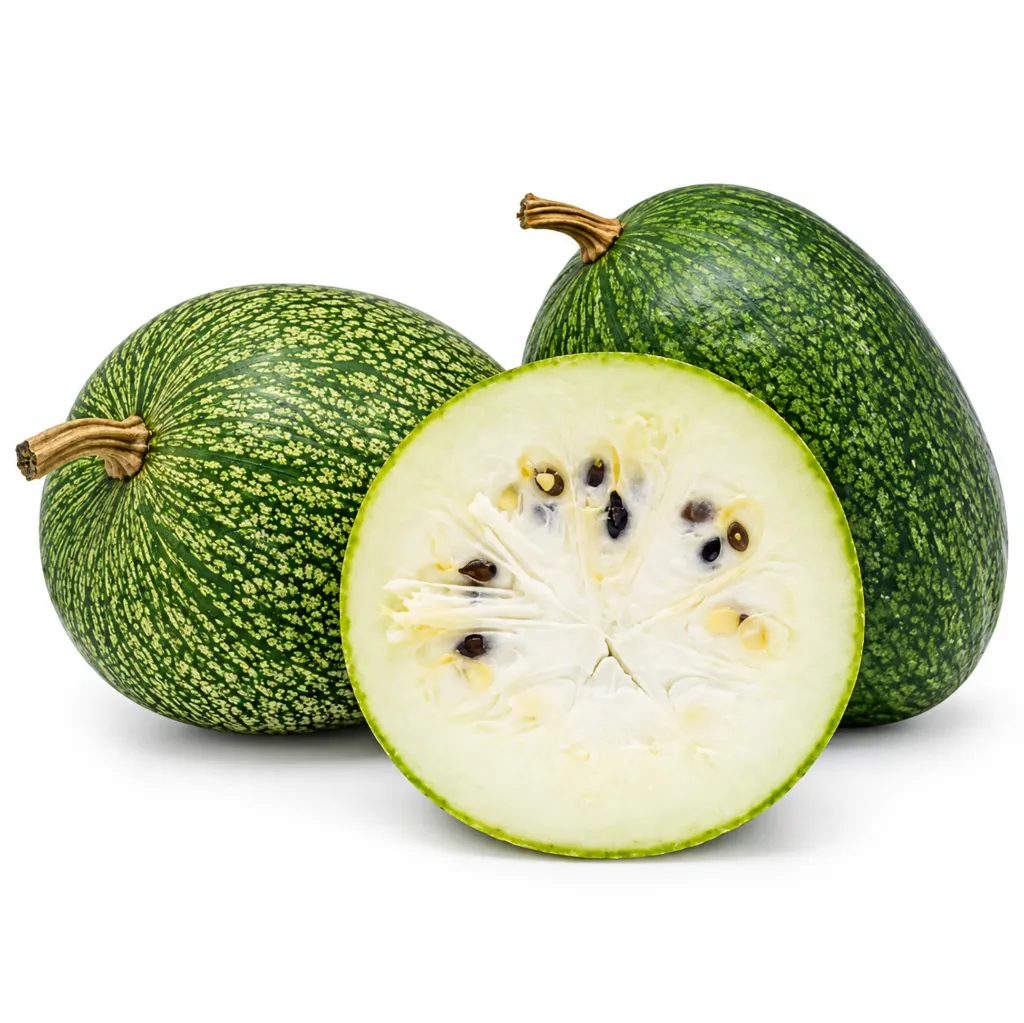
Chilacayote (Cucurbita ficifolia Bouché) is a traditional cucurbit widely used in Mexican cuisine, recognizable by its round to oval fruits, variable size and firm rind, generally green with pale mottling or stripes. At maturity, its light-colored flesh naturally separates into distinctive fibrous strands, making it particularly suitable for traditional sweets and preserves. In Mexico, both young and mature fruits are used in a variety of regional preparations.
Organoleptic Properties
Round to oval fruit with a firm, smooth rind, predominantly green with whitish or light-green patterns. The flesh is white to creamy, moist and mild in flavor, with subtle vegetal sweetness. When mature fruit is cooked, its flesh develops a characteristic fibrous, thread-like texture, readily absorbing syrups, piloncillo, spices and other ingredients. Numerous seeds are found inside the fruit and may also be roasted or ground for culinary applications.
Suggested Uses
Chilacayote is remarkably versatile in traditional Mexican cuisine. Young fruit can be prepared as a vegetable in soups, broths and chicken, pork or beef stews, as well as regional savory dishes and sauces. Its seeds may be roasted or ground and incorporated into traditional preparations such as pipián and mole verde. Gob.mx
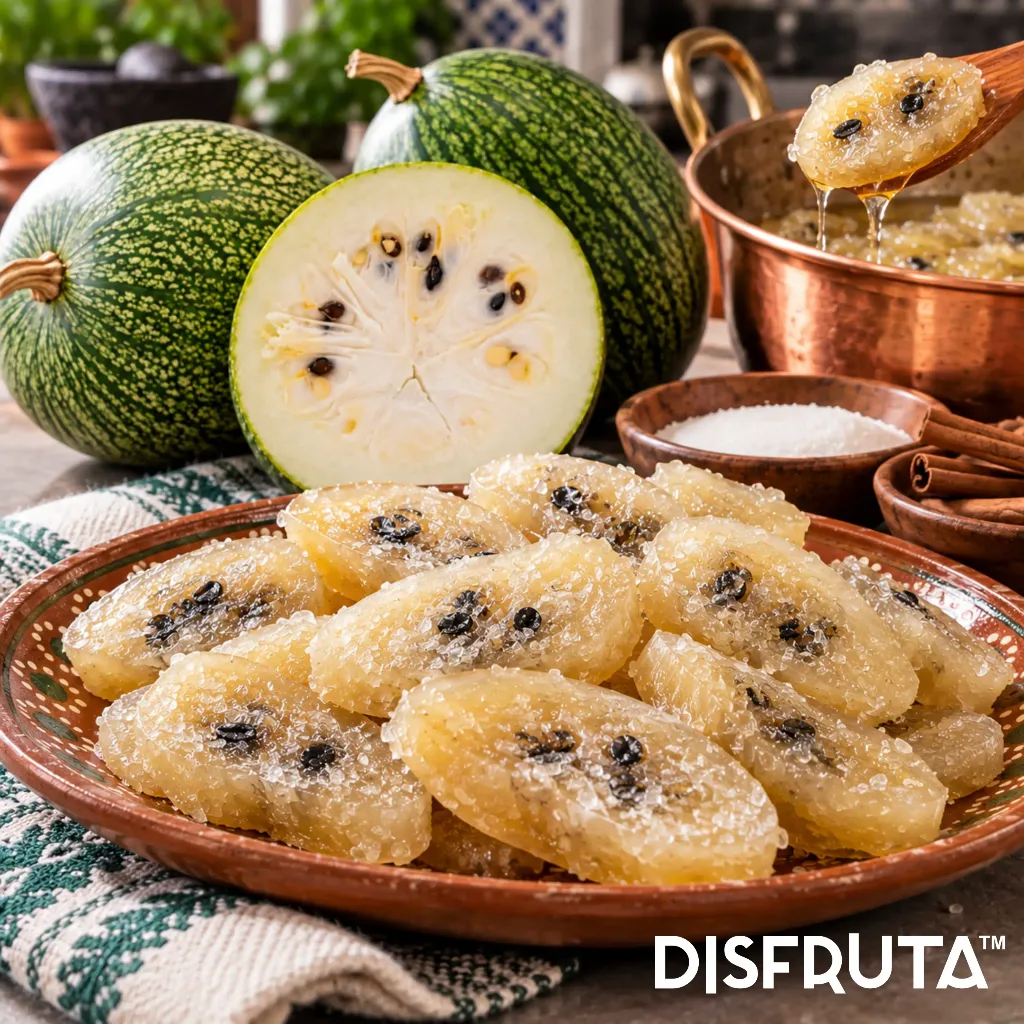
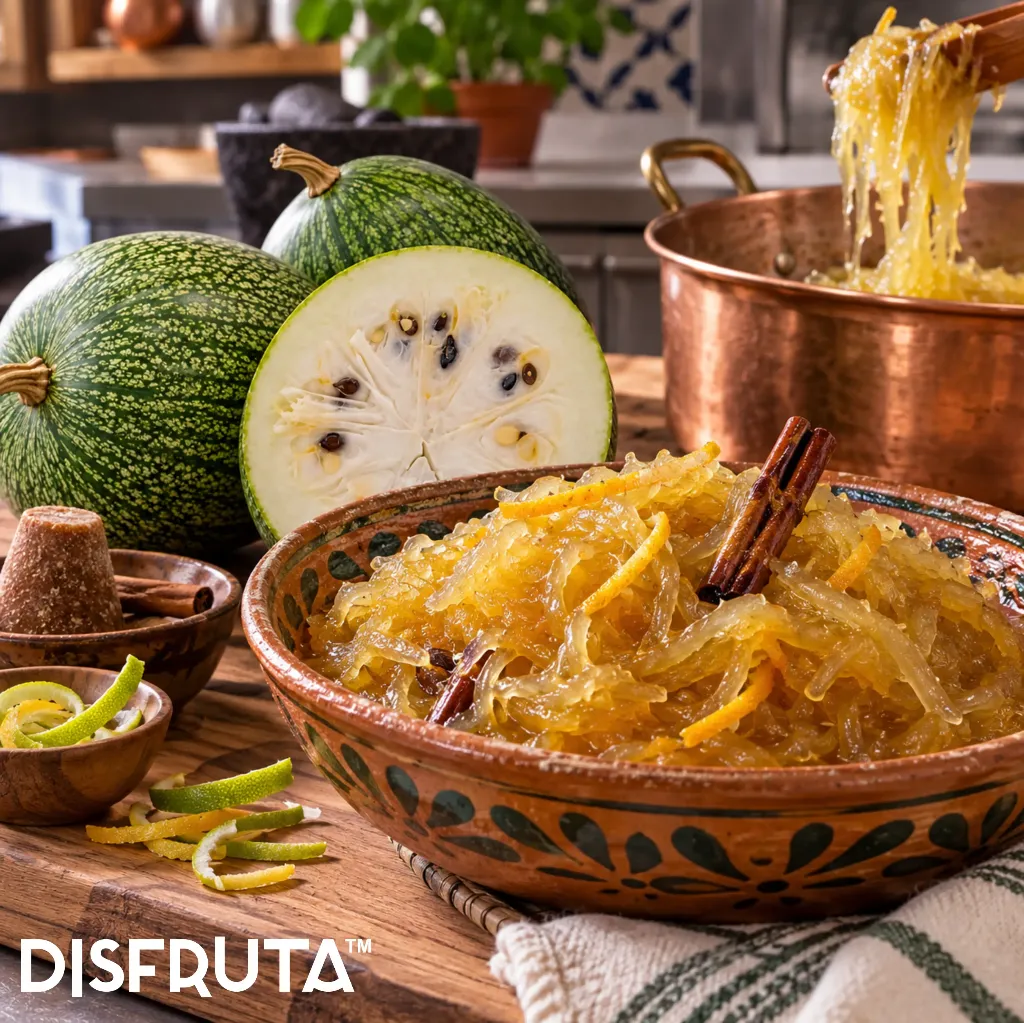
As the fruit matures, its fibrous flesh becomes particularly suitable for confectionery. Traditional Mexican preparations include crystallized chilacayote, fruit preserved in syrup or piloncillo, and pelo de ángel or cabello de ángel (“angel hair”), a preserve made by cooking the naturally occurring strands of the flesh with sugar or syrup and, depending on the recipe, cinnamon or citrus. Chilacayote can also be used in jams, preserves, pastry fillings, empanadas, breads and desserts. In Oaxaca, the fruit is also traditionally used to prepare refreshing chilacayota beverages. Larousse Cocina
Format
Bulk (BLK) per kilogram. Whole fresh fruit, subject to natural variations in size, shape, coloration and weight.
Storage and Handling
Store whole fruits in a cool, dry place protected from direct sunlight, avoiding excessive moisture, impacts and rind damage. The firm outer rind provides natural protection to mature fruit. Inspect periodically and remove fruits showing soft areas, cracks, fermentation or mold. Once cut, keep refrigerated in a clean, sealed container and use within a short period.
Quality and Selection Criteria
Select firm fruits that feel heavy for their size and have an intact rind, free from perforations, deep cracks, soft areas, significant mechanical damage, fermentation or mold. Surface coloration and pale patterns may vary naturally. For preparations such as crystallized chilacayote or angel hair preserves, developed fruits with the characteristic firm, fibrous flesh are preferred.
Origin
Mexico.
The name chilacayote comes from the Nahuatl tzilacayotli, traditionally interpreted from tzilac, meaning “smooth,” and ayotli, meaning “squash” or “gourd,” hence “smooth squash.” Gob.mx The botanical name Cucurbita ficifolia refers to the resemblance of its leaves to those of the fig tree. It is an American species with a long history as a food crop; although its precise center of domestication remains debated, chilacayote has a longstanding cultural and culinary presence in Mexico. Revistas INAH