Fresh CranberriesPack 12 Oz – 340 Gr
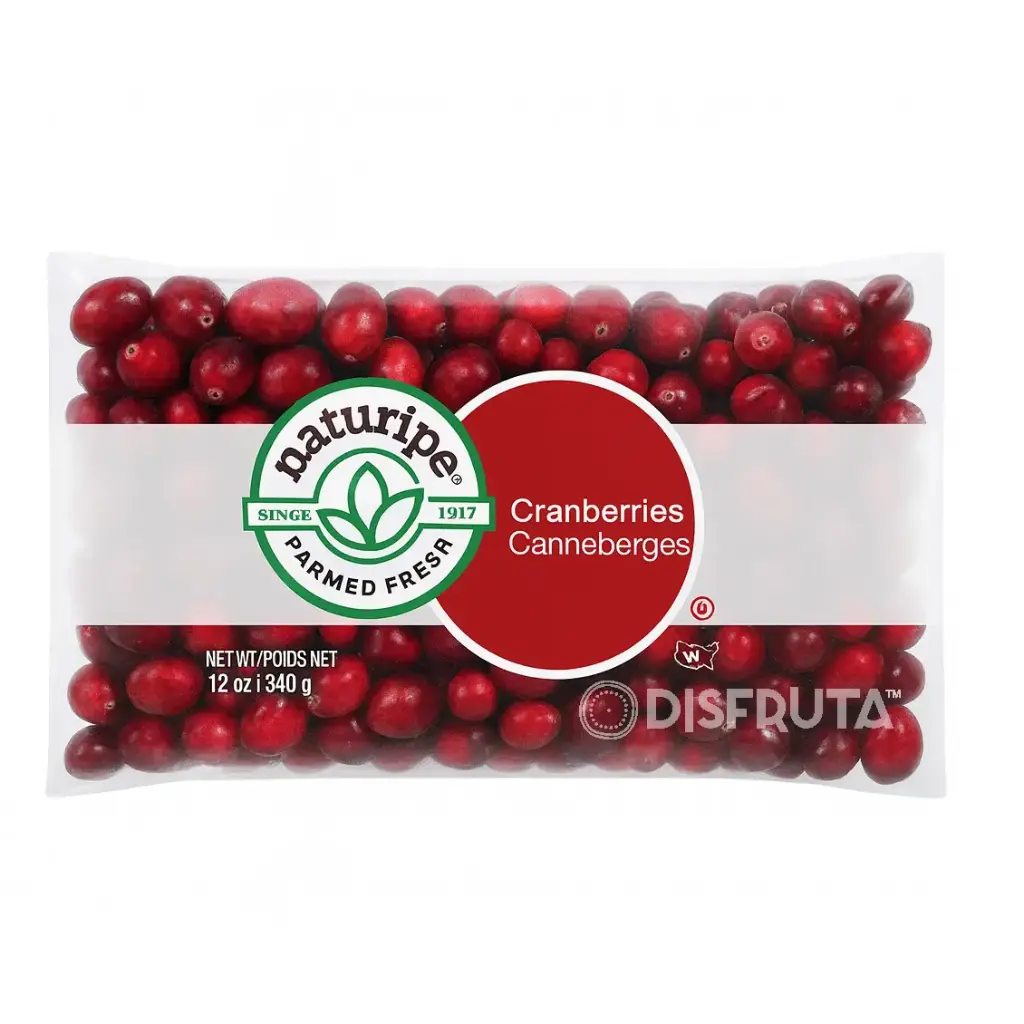
Fresh cranberries, marketed under the Naturipe® brand and grown in the United States. These berries are characterized by their intense red coloration, smooth glossy skin and firm flesh, with a distinctive pronounced tart, fresh and mildly astringent flavor. Unlike sweetened dried cranberries, fresh cranberries are naturally much less sweet, making them particularly suitable for culinary preparations, sauces, beverages, baking and preserves.
Organoleptic Properties
Small to medium-sized, round to slightly oval berries with smooth skin and coloration ranging from bright red to deep red, depending on cultivar and maturity.
The flesh is pale, firm and relatively compact, with small internal air chambers that contribute to the fruit's characteristic lightness. Flavor is intensely tart, mildly bitter and astringent, with a fresh, subtle fruity aroma. During cooking, the berries soften and release their natural juices and pigments, developing a texture particularly suitable for sauces, compotes and preserves.
Suggested Uses
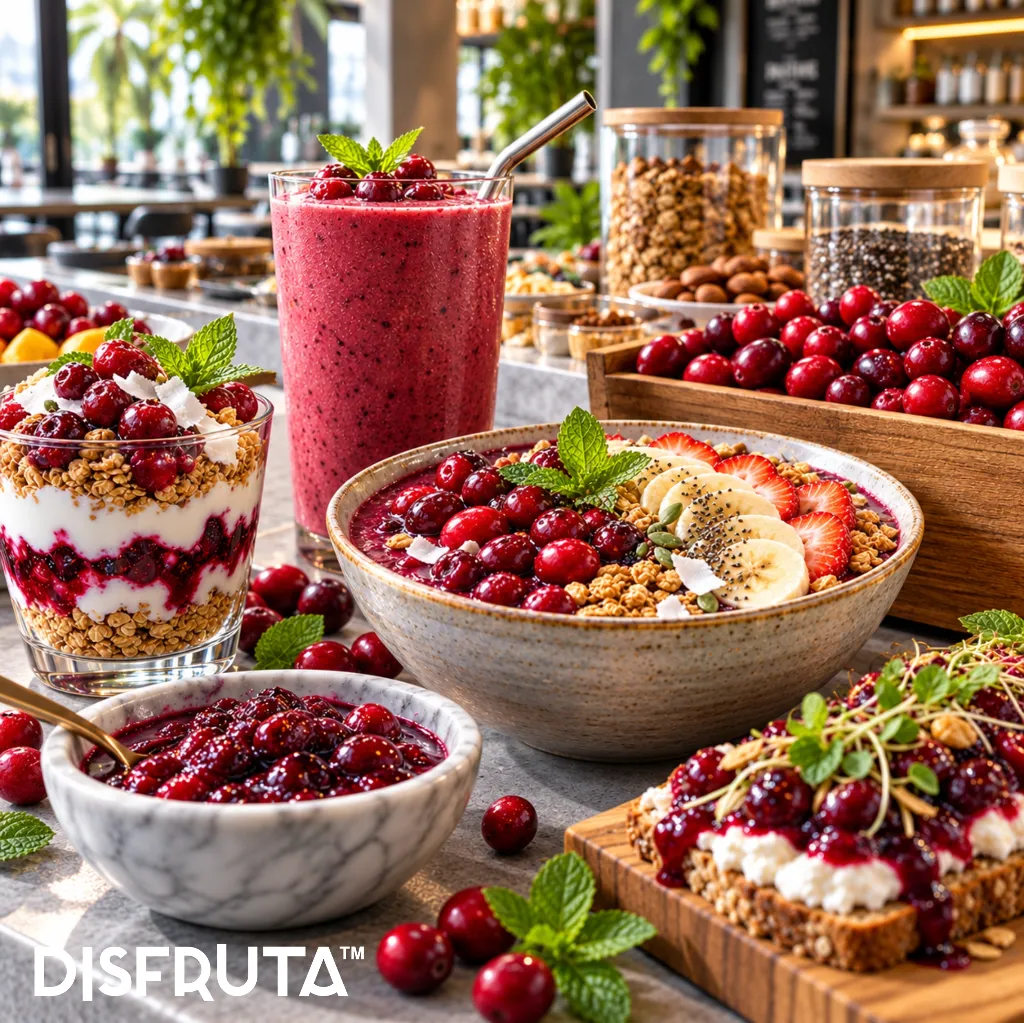
Particularly suitable for traditional cranberry sauce, a classic accompaniment to turkey and other poultry, as well as compotes, chutneys, relishes, jams, jellies and preserves.
For bakery and pastry applications, fresh cranberries can be used in muffins, breads, scones, pies, cakes, cheesecakes and fillings. They are also suitable for meat, pork and poultry sauces, salads, bowls, beverages, punches, cocktails, syrups and seasonal preparations.
Because of their naturally high acidity, cranberries are frequently combined with sugar, honey, orange juice, apples, pears, cinnamon or other spices to balance their flavor.
Format
12 Oz (approximately 340 Gr) pack of fresh Naturipe® cranberries. Whole fresh fruit ready for selection, washing and preparation.
Storage and Handling
Keep refrigerated, preferably at approximately 0–4 °C, maintaining the fruit dry and protected from excessive surface moisture. Maintain the cold chain to preserve firmness, appearance and shelf life.
Do not wash before storage; wash only the amount required immediately before use. Before preparation, sort the berries and remove any fruit that is soft, damaged or deteriorated.
For extended storage, fresh cranberries are also suitable for freezing. For many recipes, they can subsequently be used directly from frozen depending on the application.
Quality and Selection Criteria
Select berries that are firm, plump, dry and characteristically red, with intact skin and no signs of deterioration. A good-quality fresh cranberry has a notably firm structure; traditionally, its ability to bounce slightly when dropped onto a surface has been used as a practical indication of firmness and condition.
Avoid excessively soft, shriveled, wet, punctured, crushed or fermented berries, as well as fruit showing mold. Berries should be free from foreign odors and abnormal moisture accumulation.
Season
Fresh U.S. cranberries are a distinctly seasonal fruit, with harvest concentrated primarily during the fall and strongest fresh-market availability generally occurring from approximately September through November. Refrigerated storage can extend fresh availability into the year-end holiday season, making cranberries particularly associated with Thanksgiving, Christmas and winter holiday cuisine in North America.
Origin
Wisconsin, United States.
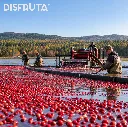
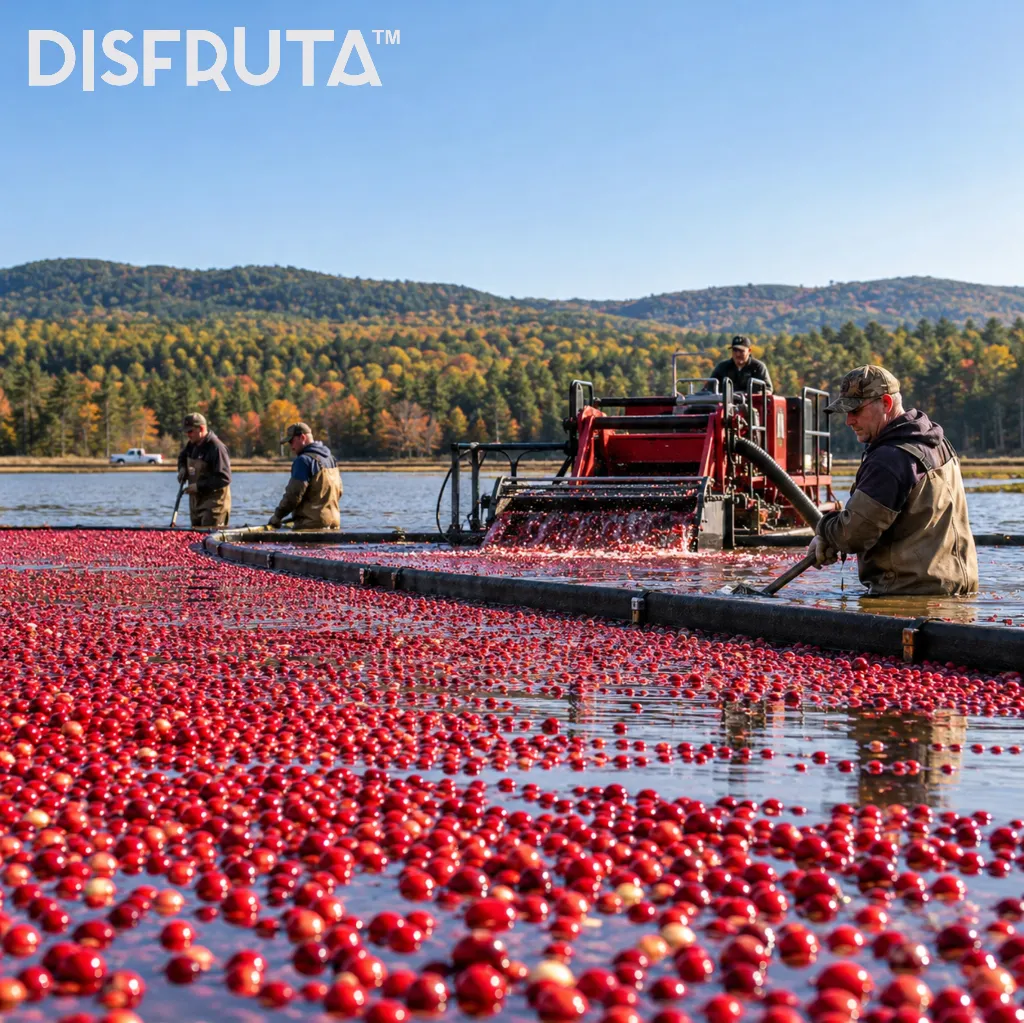
The American cranberry is primarily Vaccinium macrocarpon, a species native to North America. Its berries naturally contain anthocyanins and other phenolic compounds that contribute to their characteristic red pigmentation. Cranberries also contain small internal air chambers that allow the berries to float in water, a characteristic used in the well-known wet-harvesting method employed by some commercial growers. Despite the iconic images of flooded cranberry fields, the plants do not normally grow underwater; fields are temporarily flooded to facilitate certain harvesting methods.