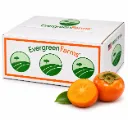
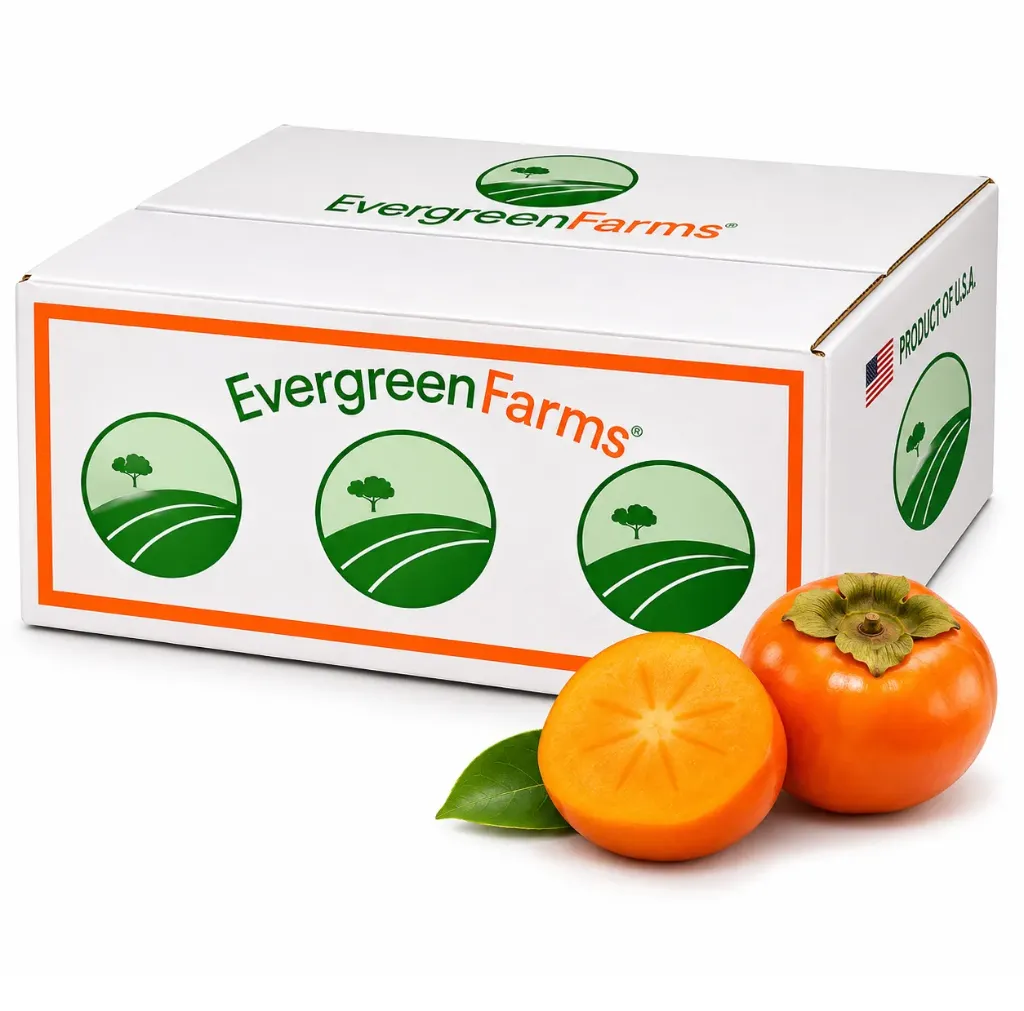
Fuyu Persimmon (Kaki) | C #54/56's | Evergreen Farms® | California | C-CTN ±11.34 Kg - 25 lb
Fuyu persimmons, also known as Fuyu kaki (Diospyros kaki Thunb.), are premium Asian-origin fruits recognized for their vibrant orange color, naturally sweet flesh, firm texture and pleasant juiciness. Grown in California, USA, and marketed under the Evergreen Farms® brand, they belong to the non-astringent persimmon group, meaning they can be enjoyed while firm and crunchy without requiring complete softening. Their approximately 11.34 Kg (25 lb) cardboard carton, featuring commercial size #54/56's, is ideal for supermarkets, fresh produce retailers, restaurants, hotels and foodservice establishments.
Organoleptic Properties
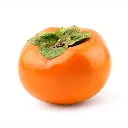
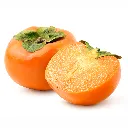
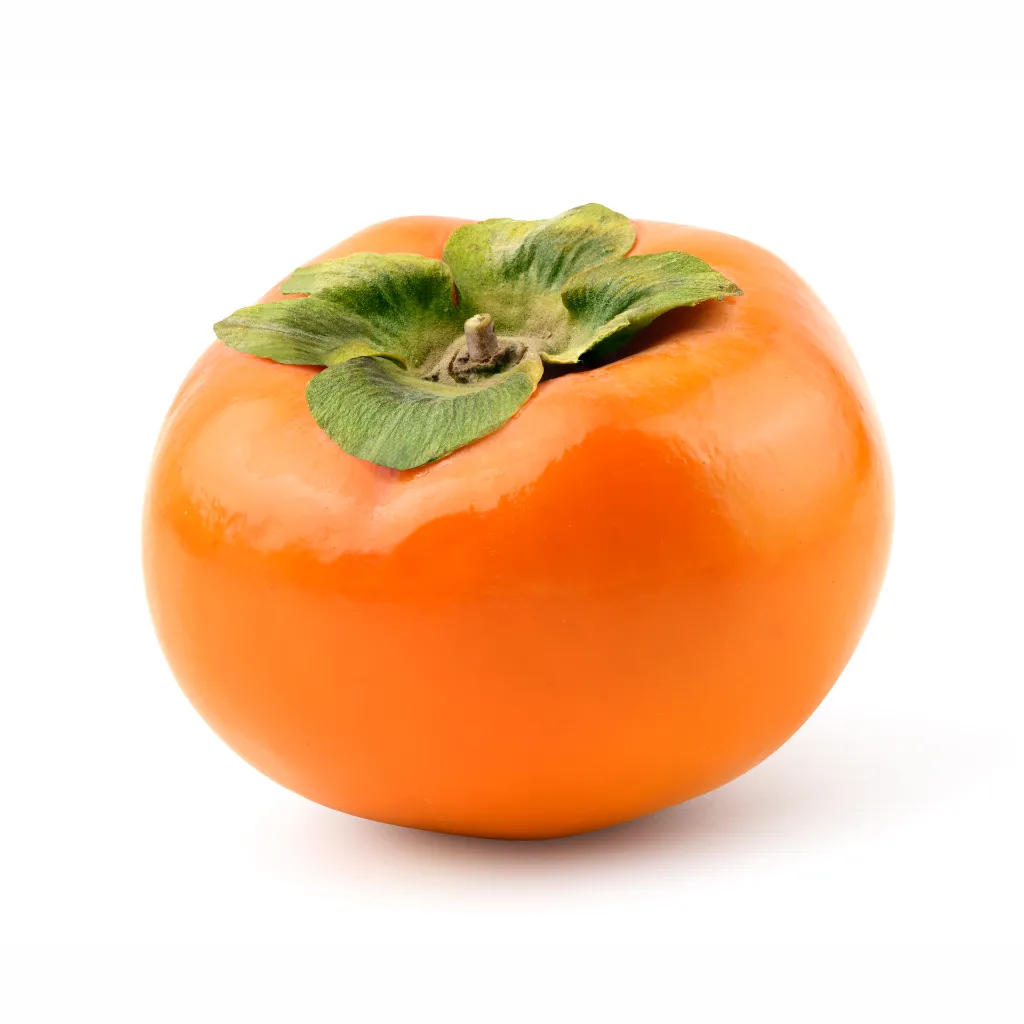
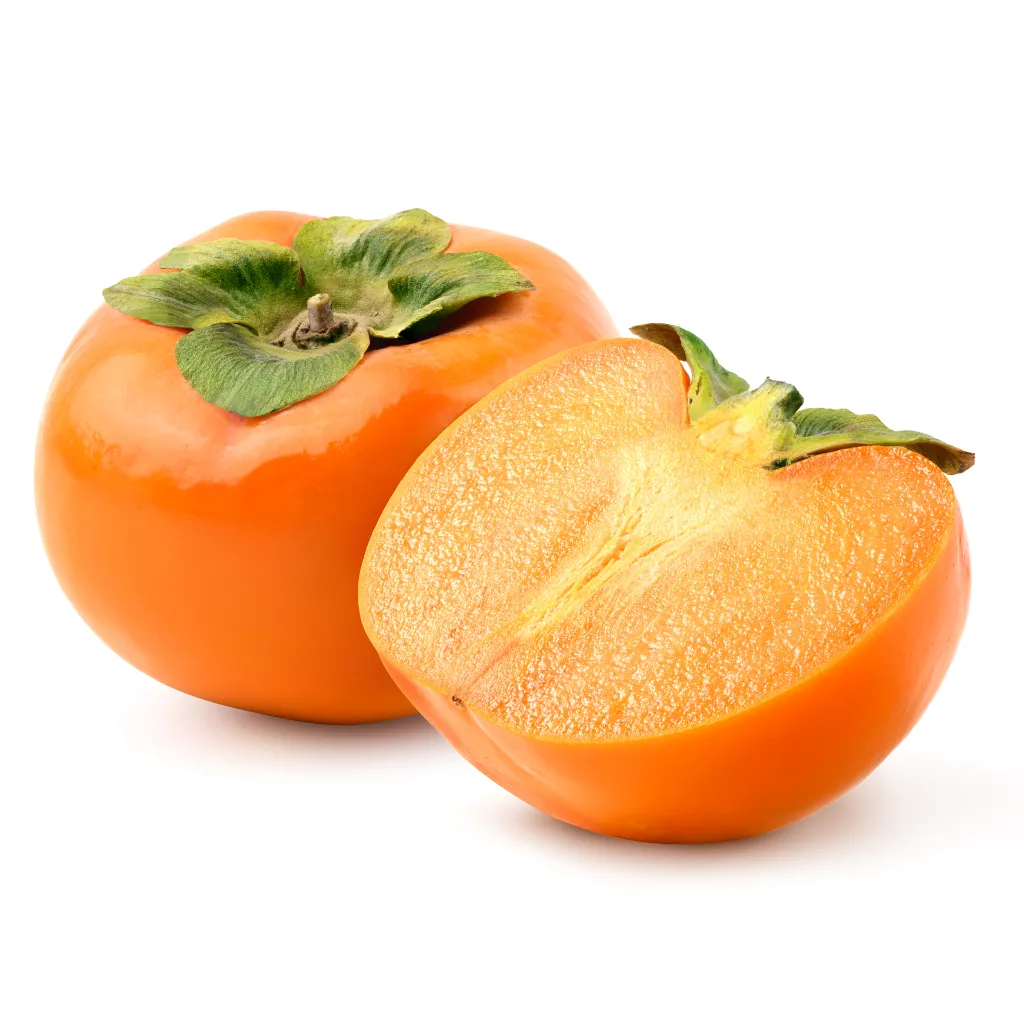
Round, slightly flattened fruit resembling a small tomato, with thin, smooth and glossy skin ranging from bright orange to reddish orange. The orange-colored flesh offers a firm, crunchy and juicy texture at commercial eating maturity, gradually becoming softer as ripening progresses. Its flavor is naturally sweet, delicate and well-balanced, with subtle notes of honey, apricot and ripe fruit. The aroma is mild and fruity, with little to no noticeable astringency.
Suggested Uses
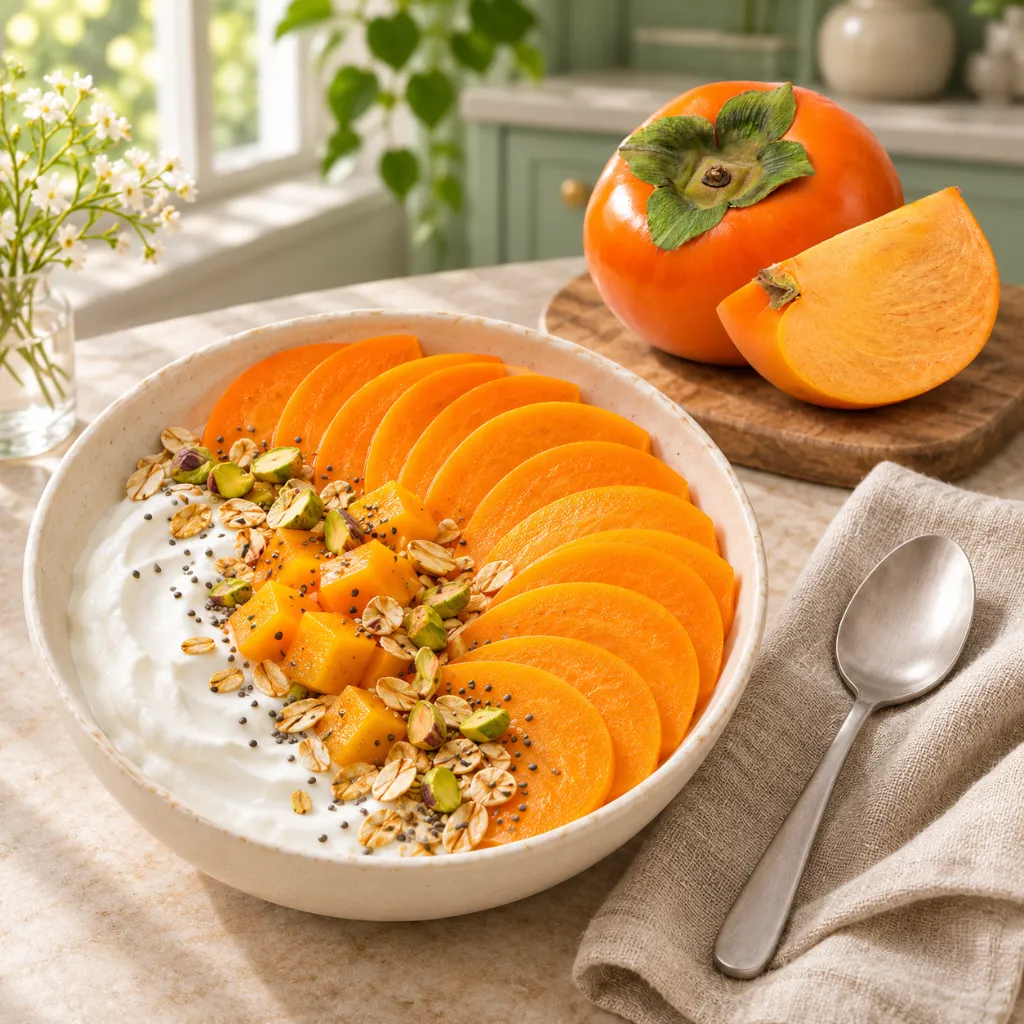
Ideal for fresh consumption, fruit salads, bowls, yogurt, breakfasts, buffets and fresh fruit platters. Fuyu persimmons can be enjoyed whole, sliced or cut into wedges, with or without the skin according to preference. In contemporary cuisine, they are excellent for gourmet salads, fruit carpaccio, fresh salsas, chutneys and accompaniments for poultry and cheese dishes. In baking and pastry applications, they can be incorporated into tarts, cakes, compotes, preserves, parfaits and caramelized desserts. They pair particularly well with goat cheese, burrata, walnuts, pistachios, pomegranate, honey, cinnamon, ginger and citrus fruits.
Format
Cardboard carton (C-CTN) containing approximately 11.34 Kg (25 lb) of fresh Fuyu persimmons, Evergreen Farms® brand, originating from California, USA. Size C #54/56's: commercial count designation indicating approximately 54 to 56 fruits per carton, with consistent sizing and attractive presentation. Suitable for commercial distribution, retail display and individual fruit sales.
Storage and Handling
For commercial storage and transportation, maintain preferably at 0 °C (32 °F) and 90–95% relative humidity, preserving a consistent cold chain. Fuyu persimmons are particularly sensitive to ethylene exposure, which accelerates softening; therefore, keep them separated from ethylene-producing fruits such as apples, bananas and ripening pears. Avoid impacts, compression and prolonged temperature fluctuations. This variety may develop chilling injury more rapidly at intermediate temperatures of 5–15 °C (41–59 °F) than at approximately 0 °C. For household consumption, refrigerate and handle carefully to preserve firmness.
Quality and Selection Criteria
Select fruit displaying uniform orange coloration, good firmness, intact skin and a well-preserved leafy calyx, without mold, decay, severe bruising or excessively soft areas. The flesh should retain a firm to gently tender texture, pleasant juiciness and natural sweetness, without fermented notes or pronounced astringency. Unlike astringent varieties such as Hachiya, Fuyu persimmons can be enjoyed while still firm, making them especially convenient for fresh consumption.
Season
In California, Fuyu persimmons are primarily harvested during the fall season, particularly between October and November, depending on the growing region and weather conditions. Their commercial availability may extend into winter through appropriate refrigeration and postharvest storage practices.
Origin
United States — California.
The persimmon (Diospyros kaki) originated in East Asia, particularly China, where it has been cultivated for centuries. Its cultivation subsequently expanded to Japan, Korea and other regions before reaching Europe and the Americas. The Fuyu variety is closely associated with the Japanese tradition of persimmon cultivation and selection.
An interesting botanical fact is that persimmons belong to the Ebenaceae family, which also includes ebony-producing trees. The scientific genus name Diospyros comes from Greek and is commonly interpreted as "divine fruit."
One of the most appreciated characteristics of Fuyu is its non-astringent nature, allowing it to be eaten crisp, much like an apple. This distinguishes it from persimmon varieties that require additional softening or special treatments to eliminate astringency.
The agricultural valleys of California, with warm summers and cooler fall temperatures, provide favorable conditions for persimmon cultivation, producing fruit appreciated for its attractive color, natural sweetness and culinary versatility.