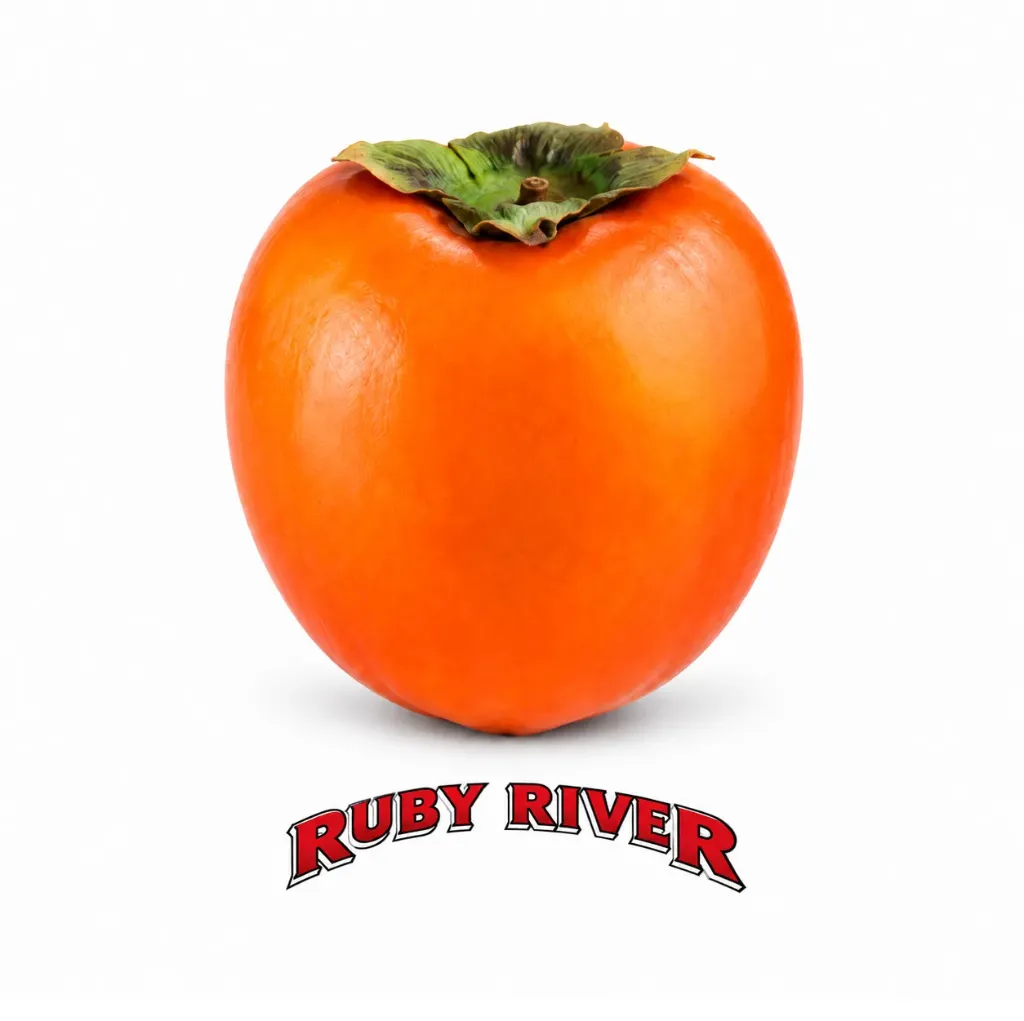
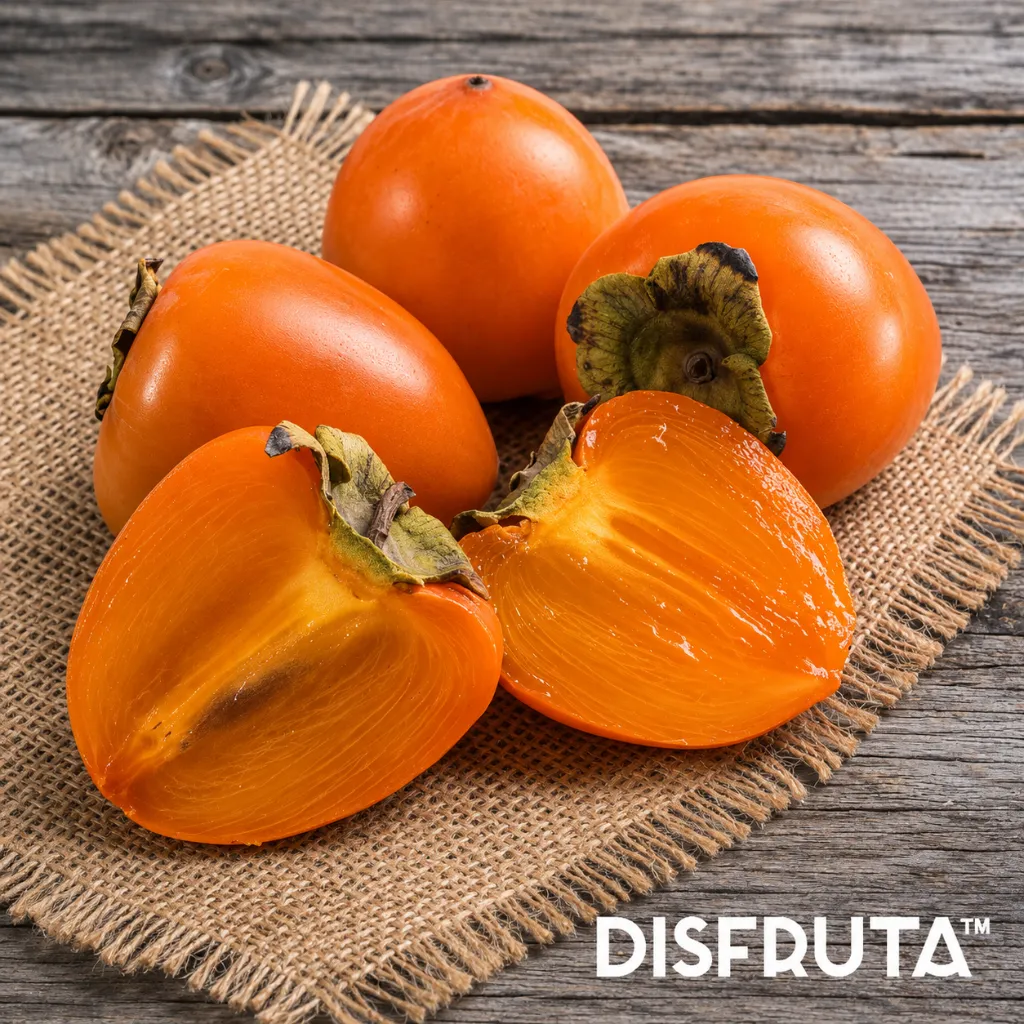
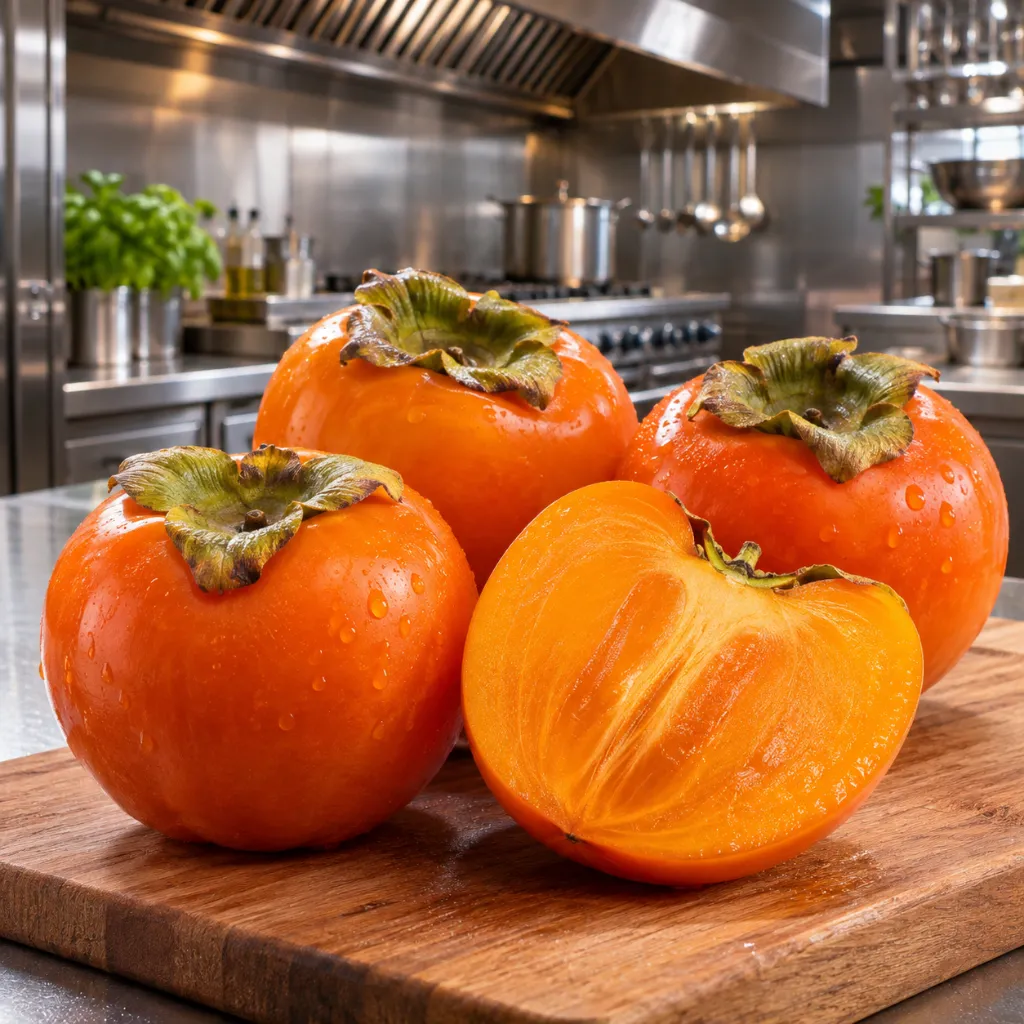
The Hachiya persimmon (Diospyros kaki) is a subtropical fruit cultivar grown in California, United States, and marketed under the Ruby River® brand. Distinguished by its elegant elongated, heart-shaped appearance, deep-orange skin and exceptionally sweet flesh, Hachiya develops a remarkable creamy texture, rich natural sweetness and delicate fruity aroma when fully ripe. Unlike Fuyu persimmons, which can be enjoyed while firm, Hachiya belongs to the astringent group of persimmon varieties and must ripen until extremely soft and almost jelly-like before being eaten fresh.
Organoleptic Properties
Medium to large fruit with a characteristic elongated oval, heart-shaped or acorn-like appearance, tapering toward a rounded point. Its thin, smooth and glossy skin ranges from yellow-orange to deep orange and reddish-orange. The flesh changes from firm to extremely soft, silky, juicy and slightly gelatinous at full eating maturity. Flavor is intensely sweet, honey-like and aromatic, with notes reminiscent of honey, ripe apricot, dates and caramel. Before reaching full ripeness, soluble tannins produce pronounced astringency, which gradually decreases as the fruit matures.
Suggested Uses
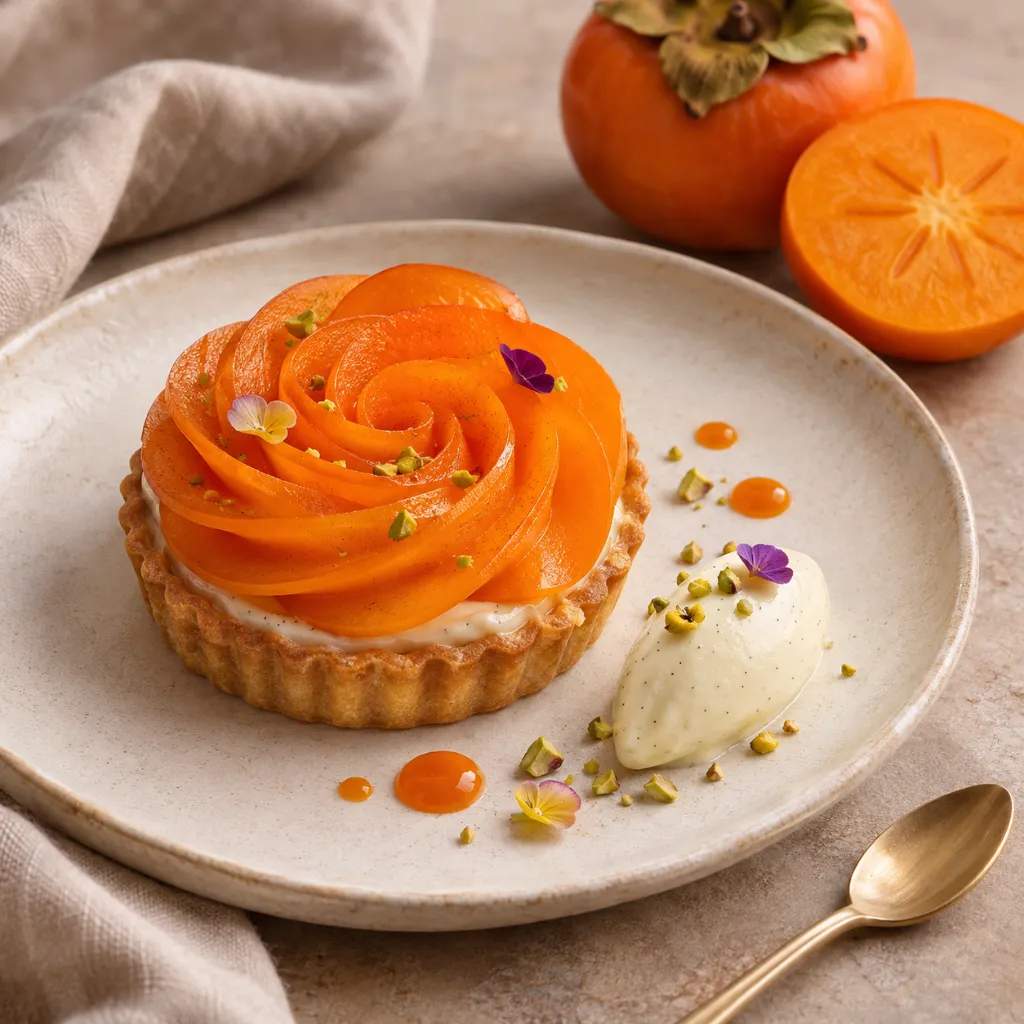
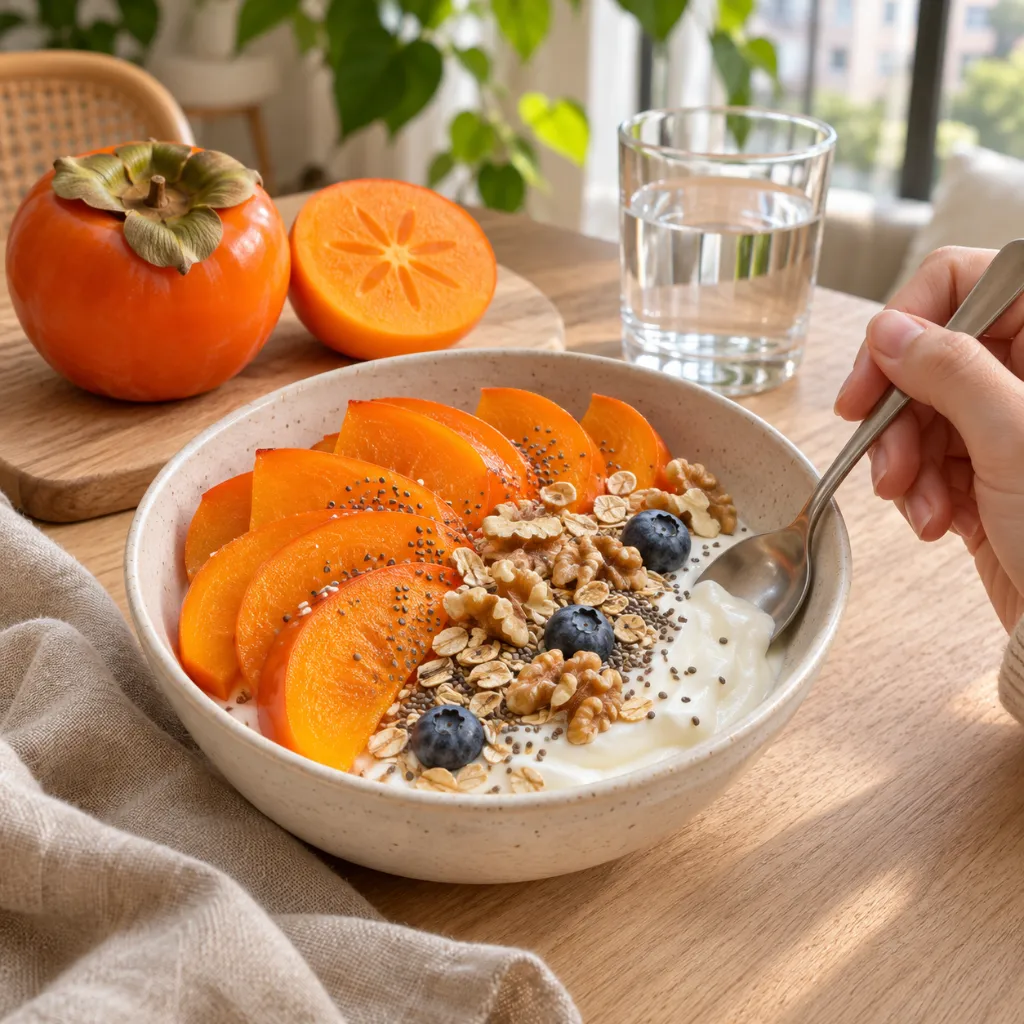
Best enjoyed fresh and completely ripe, cut in half and eaten directly with a spoon. Ideal for mousses, creams, puddings, smoothies, ice cream, frozen desserts, yogurt, bowls and spoon desserts. In baking, Hachiya is particularly suitable for persimmon bread, muffins, spiced cakes, soft cookies, pies, compotes, jams and fillings. Its ripe flesh can be used as a purée and pairs especially well with vanilla, cinnamon, ginger, pecans, almonds, chocolate and orange. It can also be incorporated into sweet sauces and seasonal gourmet preparations.
Format
Bulk (BLK) per kilogram. Fresh Hachiya persimmons, Ruby River® brand, grown in California, United States. Individual fruit size, weight and ripeness may vary according to harvest and grower selection. Fruit may be marketed firm and allowed to complete ripening before consumption while retaining its characteristic varietal qualities.
Storage and Handling
For commercial storage of firm fruit, maintain preferably near 0 °C (32 °F) and 90–95% relative humidity, preserving an uninterrupted cold chain. Avoid mechanical damage, excessive compression and unnecessary exposure to ethylene, which accelerates softening. For household consumption, allow fruit to ripen at room temperature until it becomes extremely soft, with a jelly-like consistency. Once fully ripe, refrigerate and consume promptly, as the flesh is particularly delicate. Ripe pulp may also be frozen for later use in beverages and baking. Do not eat firm or insufficiently ripe Hachiya persimmons unless they have undergone a specific astringency-removal treatment.
Quality and Selection Criteria
Select fruit that is intact, well developed, smooth-skinned and characteristically orange, with a sound calyx and no significant cracks, severe bruising, mold, fermentation or deterioration. Firm fruit with well-developed coloration may be selected for subsequent ripening, while ready-to-eat fruit should be extremely soft, sweet and free from astringency. The skin may become slightly translucent during ripening, which does not necessarily indicate a defect. Avoid abnormal leakage, fermented odors or signs of decay. For this cultivar, extreme softness is a desirable characteristic of proper ripening, provided it is not accompanied by deterioration.
Season
Hachiya is a characteristic fall and early-winter variety. In California, harvesting and commercial availability generally concentrate between October and December, depending on growing region and seasonal weather conditions. Its attractive coloration, sweetness and creamy texture make it particularly representative of autumn cuisine and seasonal desserts.
Origin
United States.
The Hachiya persimmon belongs to the species Diospyros kaki, whose cultivation has a centuries-long history in East Asia, particularly in China, Korea and Japan. The Japanese word kaki identifies the fruit, while the botanical name Diospyros is commonly interpreted as “divine fruit.” One of the most fascinating culinary traditions associated with astringent persimmons is Japanese hoshigaki, an artisanal method in which peeled persimmons are slowly dried to concentrate their sweetness and develop a tender texture. Hachiya is among the cultivars used for this traditional preparation. Its most distinctive difference from Fuyu is also one of its greatest culinary attractions: while Fuyu can be enjoyed firm and crisp, Hachiya reaches its finest eating quality when completely soft and creamy, offering an experience reminiscent of a naturally sweet, silky dessert.